
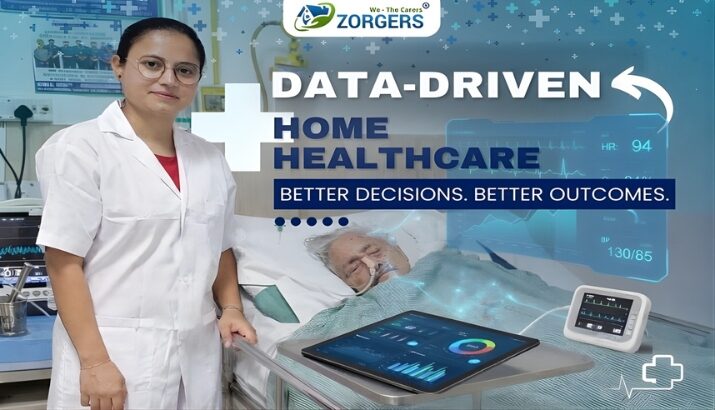
Healthcare is rapidly evolving from a reactive model to a proactive, data-driven approach. Today, patient care is no longer limited to hospital visits — it is continuously monitored, analyzed, and improved through real-time data.
In home healthcare, this transformation is especially impactful. By leveraging real-time insights, healthcare providers can monitor patient conditions, detect early warning signs, and make timely decisions that significantly improve recovery outcomes.
For patients and families, this means safer, smarter, and more personalized care — right at home.
The Shift from Reactive to Data-Driven Care
Traditionally, healthcare has been reactive — patients seek help only when symptoms become severe. However, this approach often leads to delayed treatment and higher risk of complications.
Data-driven home healthcare changes this by enabling:
- Continuous monitoring of patient vitals
- Early detection of health issues
- Timely medical intervention
- Personalized care planning
Instead of waiting for problems to arise, healthcare providers can now prevent them.
The Role of Real-Time Monitoring in Home Healthcare
Real-time monitoring is at the core of data-driven care. With the help of advanced tools and home-based medical services, patient health can be tracked continuously.
Services such as ECG at Home allow healthcare professionals to monitor heart activity without requiring hospital visits. This is especially beneficial for elderly patients and those with cardiac conditions.
Similarly, regular preventive lab tests help track important health indicators such as blood sugar, cholesterol levels, and organ function.
These insights allow doctors and caregivers to make informed decisions and adjust treatment plans
in real time.
Enhancing Patient Care Through Professional Support
While technology plays a major role, human expertise remains equally important.
Trained caregivers, nurses, and healthcare professionals ensure that data is not only collected but also properly interpreted and acted upon.
Services like Patient Care – General Nursing provide continuous medical supervision, medication management, and health monitoring at home.
For patients requiring intensive support, ICU Care – Critical Care and ICU setup at home enable advanced monitoring and treatment outside the hospital environment.
This combination of technology and professional care creates a strong foundation for better outcomes.
Managing Chronic and Critical Conditions More Effectively
Patients with chronic illnesses or critical conditions benefit the most from data-driven home healthcare.
Conditions such as heart disease, respiratory issues, or post-stroke recovery require constant monitoring and timely intervention.
With access to oxygen concentrators, BiPAP/CPAP, and other respiratory equipment, patients can receive continuous support at home.
Real-time data helps healthcare providers detect even minor changes in condition, reducing the risk of complications and hospital readmissions.
Personalized Care Plans Based on Data
Every patient is unique, and data-driven healthcare allows for truly personalized care.
By analyzing patient history, real-time vitals, and recovery progress, healthcare providers can design customized treatment plans that adapt over time.
For patients requiring continuous assistance, Live-in Care – 24 Hours Care ensures round-the-clock monitoring and support.
This personalized approach not only improves recovery outcomes but also enhances patient comfort and confidence.
Improving Decision-Making for Families, Including NRI Support
For families, especially those living abroad, staying informed about a loved one’s health can be challenging.
Data-driven systems provide transparency through regular updates, reports, and real-time monitoring.
Services like NRI Family Care ensure that families receive timely information and can actively participate in healthcare decisions, regardless of their location.
This builds trust and reduces anxiety, knowing that professional care and real-time insights are always in place.
Preventing Complications and Hospital Readmissions
One of the biggest advantages of data-driven home healthcare is its ability to prevent complications before they escalate.
Continuous monitoring, combined with services like preventive healthcare packages, helps identify early warning signs and initiate timely interventions.
This proactive approach reduces the likelihood of emergency situations and hospital readmissions, ultimately improving long-term patient outcomes.
The Future of Home Healthcare
Data-driven care is not just a trend — it is the future of healthcare delivery.
As technology continues to advance, home healthcare will become even more integrated with:
- Remote monitoring systems
- AI-driven health insights
- Predictive analytics
- Connected healthcare ecosystems
These innovations will further enhance patient safety, improve recovery rates, and make healthcare more accessible and efficient.
Conclusion
Data-driven home healthcare represents a powerful shift in how patient care is delivered.
By combining real-time insights, advanced medical support, and professional caregiving, patients can receive high-quality, personalized care in the comfort of their homes.
For healthcare providers and families alike, the focus is no longer just on treatment — but on continuous monitoring, early intervention, and improved outcomes.
Because in modern healthcare, better data leads to better decisions — and ultimately, better lives.