


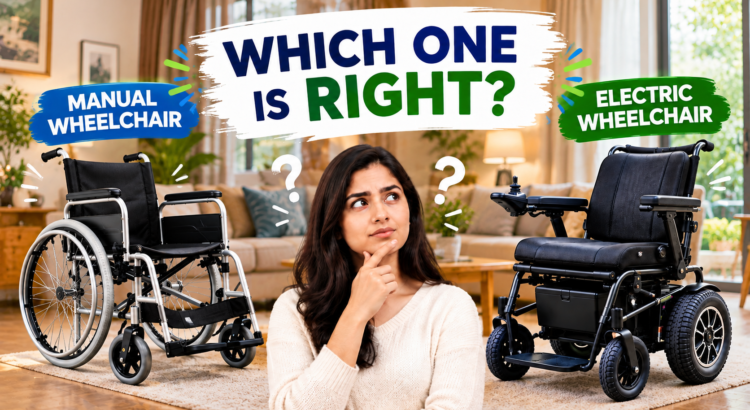
Looking for a manual vs electric wheelchair? The right choice depends on how the wheelchair will be used, the user’s mobility, physical strength, caregiver support and need for independent movement. This guide breaks down both options so you can decide with confidence.
What Is a Manual Wheelchair?
A manual wheelchair is a wheelchair that moves through human effort rather than a motor. It has no battery or electrical parts. Movement comes either from the person sitting in it or from a caregiver pushing it.
There are two common types:
- Self-propelled: The user turns large rear wheels with their hands.
- Attendant-propelled: A caregiver or family member pushes the chair using the rear handles. These usually have smaller wheels.
The small-wheel design is useful when a caregiver is always nearby, such as for elderly family members, patients recovering after surgery or hospital stays, or anyone who needs occasional support for shifting between rooms, doctor visits or short outings. Because these chairs are compact and foldable, they are also easy to store at home and carry in a car.
For example, the manual wheelchair from Zorgers is a small-wheel model. It is not self-drive, it is foldable, and it has a listed weight capacity of 100 kg. This makes it a practical option where a caregiver is available to assist with movement.
What Is an Electric Wheelchair?
An electric wheelchair, also called a motorized or powered wheelchair, is driven by a motor and a rechargeable battery. Instead of pushing wheels, the user controls movement with a joystick or similar control, which means the chair moves with very little physical effort.
Electric wheelchairs are useful for people who:
- Find it difficult or tiring to push a manual wheelchair
- Want to move around without depending on someone else every time
- Need to cover longer distances regularly
They also need a few extra considerations: the battery must be charged, the chair is generally heavier, and it needs some care and maintenance.
The electric wheelchair from Zorgers is a self-drive model with dual 250W motors and a 24V 12Ah battery. It has a listed driving range of 15–20 km and a maximum speed of 6 km/h.
Manual vs Electric Wheelchair: Key Differences
| Factor | Manual Wheelchair | Electric Wheelchair |
|---|---|---|
| Movement | User or caregiver pushes | Motor powered |
| Physical effort | Depends on the model and user | Lower pushing effort |
| Self-drive | Model dependent | Yes, on the listed electric model |
| Battery | Not required | Required |
| Caregiver support | Often useful | May reduce dependence |
| Portability | Generally easier | Model dependent |
| Daily use | Depends on the user | Suitable for powered mobility needs |
| Cost | Generally lower | Generally higher |
Neither type is “better” in every situation. The right one is the one that matches the user’s needs.
Manual vs Electric Wheelchair: Which One Should You Choose?
A manual wheelchair may be suitable if:
- A caregiver or family member is available to help
- Mobility support is needed only occasionally
- The wheelchair will be transported often, such as in a car for hospital visits
- Self-propulsion or assisted pushing is possible
An electric wheelchair may be suitable if:
- Pushing a manual wheelchair is difficult
- Powered movement is required
- The user wants to move independently
- The wheelchair will be used frequently through the day
What Should You Check Before Choosing?
Going through this checklist first helps avoid buying or renting a wheelchair that doesn’t fit your daily life.
- Weight capacity: Confirm the listed capacity suits the user.
- Seat width and comfort: The user will spend long hours seated, so fit and cushioning matter.
- Door and lift accessibility: Check that the wheelchair can pass through home doorways, bathrooms and lifts.
- Indoor vs outdoor use: Compact chairs suit indoor use, while outdoor movement may need a different setup.
- Distance of daily use: Short movements and longer daily distances call for different choices.
- Battery and range (electric models): Check the driving range and charging routine.
- Foldability: A foldable chair is easier to store and carry.
- Transportation: Make sure the wheelchair fits in your vehicle.
- Caregiver availability: Consider who will be around to assist, and when.
- Rent vs purchase: Match the option to how long the wheelchair is needed.
- Maintenance and support: Especially important for electric models with batteries and motors.
Rent or Buy: Which Option Makes Sense?
Renting works well for temporary recovery, a short-term mobility requirement, or when you want to try a wheelchair for a limited period before deciding.
Buying makes more sense for a long-term requirement or when the wheelchair will be used regularly.
Zorgers lists rental options alongside purchase options on its wheelchair pages, so you can choose based on how long you need the equipment.
Quick Answer: Manual or Electric Wheelchair?
Manual or electric wheelchair — which should you choose?
Choose a manual wheelchair when caregiver assistance or manual movement is practical. Consider an electric wheelchair when powered mobility and reduced physical effort are important. The final choice should depend on the user’s mobility, strength, environment and daily usage.
Frequently Asked Questions
Q.1 What is the difference between a manual and electric wheelchair?
A manual wheelchair is moved by the user or a caregiver pushing it, while an electric wheelchair uses a motor and battery and is controlled with a joystick or similar control. Electric models need charging but require much less physical effort to move.
Q.2 Is an electric wheelchair easier to use?
For most people who find pushing tiring or difficult, yes. An electric wheelchair reduces physical effort because the motor does the work. It does involve a battery and controls, so a short familiarisation period is helpful.
Q.3 Who should use a manual wheelchair?
A manual wheelchair suits people who need occasional mobility support, especially where a caregiver is available to push. It is also a good fit when the wheelchair needs to be folded and transported often.
Q.4 Who can use an electric wheelchair?
An electric wheelchair can suit people who need powered movement, find manual pushing difficult, or want to move independently. The user should be able to operate the controls safely, and a doctor or physiotherapist can advise on suitability.
Q.5 Is an electric wheelchair suitable for elderly people?
It can be, particularly for seniors who have limited strength or want more independence at home. Check that the user can operate the controls comfortably and that the chair fits through doorways and living spaces.
Q.6 Can I rent a wheelchair instead of buying one?
Yes. Renting is a practical option for short-term needs such as recovery after surgery or illness. Zorgers offers rental along with purchase options for its wheelchairs.
Q.7 How do I choose the right wheelchair?
Start with the user’s mobility, strength and daily routine. Then check weight capacity, seat comfort, foldability, indoor and outdoor use, and caregiver availability. If you are unsure, speak to a medical equipment expert before deciding.
If You Have Any Query
Talk to a Zorgers medical equipment expert for guidance on available manual and electric wheelchair options for rent or purchase. Call+91 8725024124,
You can also explore our manual wheelchair and electric wheelchair pages.