


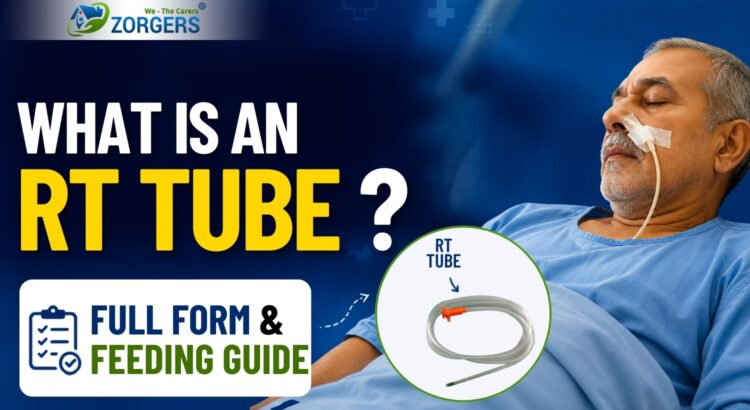
Quick Answer
RT full form: Ryle’s Tube (RT), also known as a Nasogastric (NG) Tube.
An RT tube is a thin, flexible tube that doctors insert through the nose into the stomach. It helps patients receive liquid nutrition, water, and medicines when they cannot swallow safely. Doctors also use it to remove excess gas or fluid from the stomach.
RT tube feeding is common for stroke patients, unconscious patients, ventilator patients, and individuals with severe swallowing difficulties. Although RT feeding can be managed at home, a trained nurse should always perform the procedure to reduce the risk of choking, aspiration pneumonia, and tube blockage.
Key Facts
- RT stands for Ryle’s Tube.
- RT Tube, Ryle’s Tube, and NG Tube refer to the same medical device.
- Doctors use it for feeding, hydration, medication, and stomach decompression.
- Most patients receive 200–300 ml of feed every 2–4 hours, depending on their doctor’s advice.
- Keep the patient in a 30–45° upright position during feeding and for at least 30–60 minutes afterward.
- Feeding too quickly or using the wrong technique increases the risk of serious complications.
- Professional nursing care helps ensure safe RT feeding and proper tube management at home.
Table of Contents
- What Is an RT Tube?
- RT Full Form Explained
- Why Is an RT Tube Needed?
- What Is RT Feeding?
- RT Feeding Procedure (Step by Step)
- RT Feed Diet Chart
- Risks of RT Tube Feeding
- RT Tube Care at Home
- Frequently Asked Questions
What Is an RT Tube?
An RT tube is a soft, flexible plastic tube that doctors insert through the patient’s nose and gently guide into the stomach. This medical device allows patients to receive nutrition, water, and medicines when they cannot eat or swallow safely.
Doctors commonly recommend an RT tube for patients recovering from a stroke, brain injury, major surgery, or neurological disorders. In many cases, unconscious or bedridden patients also require RT tube feeding to maintain proper nutrition and hydration.
Besides feeding, an RT tube can also remove excess gas, stomach contents, or digestive fluids. As a result, doctors frequently use it after abdominal surgery or in patients experiencing severe vomiting or intestinal obstruction.
Because an RT tube plays an important role in patient recovery, healthcare professionals must insert and monitor it carefully. Proper placement and regular assessment significantly reduce the risk of complications.
RT Full Form Explained
RT stands for Ryle’s Tube, named after the British physician John Alfred Ryle. Today, healthcare professionals also refer to it as a Nasogastric (NG) Tube because it passes from the nose (nasal cavity) into the stomach (gastric cavity).
You may hear different terms in hospitals, including:
- Ryle’s Tube (RT Tube)
- Nasogastric (NG) Tube
- Feeding Tube
- NG Feeding
- RT Feeding
Although the names differ, they all refer to the same medical device and feeding method. In India, doctors and nurses commonly use the term RT Tube, while international medical guidelines often use NG Tube.
Why Is an RT Tube Needed?
Doctors recommend an RT tube when a patient cannot swallow food, liquids, or medicines safely. Instead of relying on oral feeding, the tube delivers nutrition directly into the stomach while reducing the risk of choking.
Several medical conditions may require RT tube feeding.
Stroke
Many stroke patients develop dysphagia (difficulty swallowing). As a result, food or water may enter the lungs instead of the stomach. An RT tube provides safe nutrition until swallowing improves.
Unconscious or Comatose Patients
Patients who are unconscious cannot eat or drink on their own. Therefore, doctors use an RT tube to provide nutrition, hydration, and medications.
Ventilator Patients
Patients on mechanical ventilation cannot consume food orally. Consequently, healthcare professionals administer liquid nutrition through an RT tube.
After Major Surgery
Some patients temporarily lose the ability to swallow after abdominal, neck, or neurological surgery. During recovery, an RT tube ensures they continue receiving adequate nutrition.
Bedridden or Elderly Patients
Older adults and bedridden patients often experience weak swallowing muscles. In such cases, RT feeding lowers the risk of choking and aspiration while maintaining nutritional intake.
Stomach Decompression
Doctors also use an RT tube to remove excess air, fluid, or stomach contents. This process relieves abdominal pressure and supports recovery after surgery or intestinal obstruction.
Regardless of the reason, the treating doctor decides whether an RT tube is appropriate based on the patient’s medical condition, nutritional needs, and expected recovery.
Frequently Asked Questions
Q.1 What is the full form of RT Tube?
RT stands for Ryle’s Tube, also known as a Nasogastric (NG) Tube. Doctors use it to deliver nutrition, fluids, and medicines directly into the stomach.
Q.2 Is an RT Tube the same as an NG Tube?
Yes. RT Tube and Nasogastric (NG) Tube refer to the same medical device. “Ryle’s Tube” is the term commonly used in India, while “NG Tube” is the standard international medical term.
Q.3 Why do doctors insert an RT Tube?
Doctors insert an RT Tube when patients cannot swallow food, water, or medicines safely. It also helps remove excess air or fluid from the stomach.
Q.4 Can RT feeding be done at home?
Yes. RT feeding can be safely managed at home by trained nurses or caregivers who follow the treating doctor’s instructions.
Q.5 How often should RT feeding be given?
The feeding schedule depends on the patient’s condition. Most patients receive feeds every 2–4 hours, but the treating doctor decides the exact timing and quantity.
Q.6 What foods can be given through an RT Tube?
Doctors or dietitians usually recommend liquid nutritional formulas or well-strained homemade feeds such as dal water, blended khichdi, soup, and prescribed nutritional supplements.
Q.7 What are the risks of RT Tube feeding?
Incorrect feeding may cause aspiration pneumonia, tube blockage, vomiting, abdominal discomfort, or tube displacement. Therefore, proper training and hygiene are essential.
Q.8 How long can a patient stay on an RT Tube?
The duration depends on the patient’s recovery. Some patients need it for a few days, while others may require it for several weeks or months.
Q.9 Who should avoid removing an RT Tube?
Only a qualified doctor or trained healthcare professional should remove an RT Tube. Family members should never attempt to remove it without medical guidance.
Q.10 When should I contact a doctor immediately?
Seek immediate medical attention if the patient experiences persistent coughing during feeding, difficulty breathing, vomiting, fever, abdominal swelling, or if the tube appears displaced. If home nursing support is needed, contact Zorgers for trained assistance.