
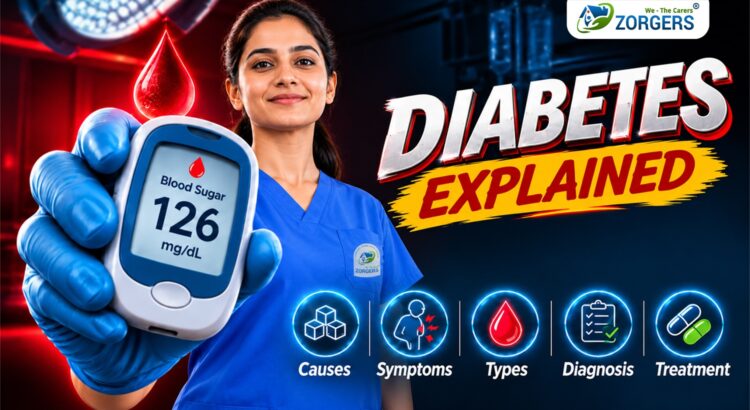
Diabetes is a health condition in which the level of glucose (sugar) in the blood becomes higher than normal. It happens when the body does not produce enough insulin or cannot use insulin properly. Insulin is a hormone that helps glucose move from the bloodstream into the body’s cells, where it is used for energy.
You may have heard someone say they have high blood sugar or diabetes. But what does that actually mean, and how can it affect everyday health?
Diabetes can affect people of different ages, including young adults and senior citizens. Some people experience frequent urination, unusual thirst or constant tiredness, while others may have no noticeable symptoms for years.
With timely diagnosis, appropriate treatment and consistent care, people with diabetes can manage their blood sugar levels and reduce the risk of complications.
In this guide, we explain what diabetes is, why it develops, its common warning signs, the different types, how it is diagnosed and what daily diabetes management involves.
What Is Diabetes Mellitus?
Diabetes mellitus is the medical name for diabetes. It refers to a group of conditions that affect how the body regulates blood glucose.
When we eat, the body breaks down carbohydrates into glucose, which enters the bloodstream. The pancreas produces a hormone called insulin that helps glucose move from the blood into the body’s cells.
When the body does not produce enough insulin or cannot use it effectively, glucose starts building up in the bloodstream. This is known as high blood sugar or hyperglycaemia.
If blood sugar remains high over a long period, it can increase the risk of complications affecting the heart, kidneys, eyes and nerves.
Diabetes is a long-term health condition, but regular monitoring and the right medical care can help people manage it.
How Common Is Diabetes in India?
Diabetes is an important public health concern in India. According to the ICMR-INDIAB study published in 2023, an estimated 10.1 crore people in India were living with diabetes based on the study’s findings.
These numbers highlight why awareness, early testing and access to appropriate healthcare matter.
Diabetes does not always cause noticeable symptoms in its early stages. Some people discover they have it during a routine health check-up or when they get tested for another health concern.
For this reason, people with known risk factors should discuss appropriate screening with their healthcare professional.
Source: ICMR-INDIAB national study, published in The Lancet Diabetes & Endocrinology (2023).
What Are the Main Causes of Diabetes?
There is no single cause of diabetes. The reasons vary depending on the type of diabetes and may involve genetics, insulin resistance, the immune system, hormonal changes and other medical conditions.
Here are some important causes and risk factors:
1. Insulin Resistance
Insulin resistance occurs when the body’s cells do not respond properly to insulin. The pancreas initially tries to compensate by producing more insulin.
Over time, it may not be able to produce enough insulin to meet the body’s needs. This is a major factor in the development of type 2 diabetes.
2. Family History and Genetics
Having a parent or sibling with diabetes can increase a person’s risk. However, family history does not mean that someone will definitely develop the condition.
Genetic factors can influence how the body produces and uses insulin.
3. Excess Body Weight
Excess body weight, particularly around the abdomen, is associated with a higher risk of insulin resistance and type 2 diabetes.
4. Lack of Physical Activity
Regular physical activity helps the body use insulin more effectively. Spending long periods sitting and following an inactive routine can contribute to the risk of type 2 diabetes.
5. Autoimmune Reaction
Type 1 diabetes develops when the immune system mistakenly attacks the insulin-producing cells in the pancreas.
This reduces or stops insulin production. Type 1 diabetes is not caused by eating too much sugar or following an unhealthy lifestyle.
6. Hormonal Changes During Pregnancy
Hormones produced during pregnancy can make the body’s cells less responsive to insulin.
If the pancreas cannot produce enough additional insulin to meet the body’s needs, gestational diabetes may develop.
7. Certain Medical Conditions and Medicines
Some pancreatic diseases, hormonal disorders and medicines, including certain steroids, can affect blood sugar levels and increase the risk of diabetes.
Remember: Having one or more risk factors does not confirm that someone has diabetes. A healthcare professional can assess the person’s risk and recommend appropriate blood tests.
What Are the 10 Warning Signs of Diabetes?
Diabetes symptoms can develop gradually. Some people notice changes in their daily routine, while others may not experience obvious symptoms.
Here are 10 warning signs worth paying attention to:
1. Frequent Urination
If someone needs to urinate more often than usual, particularly during the night, it may be associated with high blood sugar. The kidneys work to remove excess glucose through urine.
2. Increased Thirst
Frequent urination can cause the body to lose more fluid, leading to unusual thirst or a dry mouth.
3. Feeling Hungry More Often
Some people with diabetes feel hungry even after eating. This can happen when the body cannot use glucose effectively for energy.
4. Unexplained Weight Loss
Losing weight without changing your diet or exercise routine can sometimes be a sign of diabetes, particularly type 1 diabetes.
5. Constant Tiredness
When glucose cannot enter the body’s cells effectively, a person may feel unusually tired or lack energy throughout the day.
6. Blurred Vision
High blood sugar can affect the fluid balance in the eyes and temporarily change vision. Persistent or sudden vision changes should be assessed by a healthcare professional.
7. Slow-Healing Cuts and Wounds
Cuts, wounds or sores that take longer than expected to heal may be associated with poorly controlled blood sugar.
8. Tingling or Numbness in the Hands and Feet
High blood sugar over time can damage nerves, causing tingling, burning sensations, pain or numbness, particularly in the feet and hands.
9. Frequent Infections
Some people with diabetes experience recurring skin, urinary tract or yeast infections. High blood sugar can contribute to an environment in which certain infections are more likely.
10. Dry or Itchy Skin
Dehydration and changes associated with high blood sugar may contribute to dry or itchy skin.
Can someone have diabetes without experiencing these symptoms?
Yes. Some people, particularly those with type 2 diabetes, may have no noticeable symptoms. A blood test is needed to diagnose the condition.
When should you seek urgent medical attention?
Vomiting, abdominal pain, fruity-smelling breath or deep, difficult breathing, particularly along with symptoms of high blood sugar, can be signs of diabetic ketoacidosis (DKA). This is a serious medical emergency and requires immediate medical attention.
What Are the 4 Main Types of Diabetes?
Diabetes is commonly grouped into four broad categories: type 1 diabetes, type 2 diabetes, gestational diabetes and other specific types.
Let’s understand how they differ.
1. Type 1 Diabetes
Type 1 diabetes is an autoimmune condition. The immune system mistakenly attacks the cells in the pancreas responsible for producing insulin.
It can develop during childhood, adolescence or adulthood. People with type 1 diabetes need insulin treatment to survive.
2. Type 2 Diabetes
Type 2 diabetes is the most common form of diabetes.
It develops when the body does not use insulin effectively and, over time, may not produce enough insulin to maintain healthy blood sugar levels.
Factors such as family history, ageing, excess body weight and physical inactivity can increase the risk.
3. Gestational Diabetes
Gestational diabetes develops during pregnancy when blood sugar levels become higher than normal.
It often improves after childbirth, but the mother may have a higher risk of developing type 2 diabetes later in life. Follow-up testing after pregnancy is important.
4. Other Specific Types of Diabetes
Some forms of diabetes develop due to specific genetic conditions, pancreatic diseases, hormonal disorders or certain medicines.
Examples include monogenic diabetes and diabetes associated with diseases of the pancreas.
The exact type is identified through medical assessment and appropriate testing.
How Is Diabetes Diagnosed?
Symptoms alone cannot confirm diabetes. Doctors use blood tests to check glucose levels and determine whether a person has the condition.
Common tests include:
1. Fasting Blood Glucose Test
This test measures blood sugar after a period of fasting, usually overnight.
2. HbA1c Test
The HbA1c test provides an estimate of average blood glucose levels over approximately the previous three months.
3. Oral Glucose Tolerance Test
During this test, blood glucose is measured before and after the person drinks a glucose-containing liquid. It helps doctors understand how the body processes glucose.
4. Random Blood Glucose Test
This test measures blood sugar at a particular time, regardless of when the person last ate. It may be used when someone has symptoms that suggest diabetes.
Doctors may recommend repeat testing to confirm a diagnosis. The appropriate test and interpretation depend on the person’s circumstances, including pregnancy and other health conditions.
Important: A home glucose meter can help monitor blood sugar, but it should not be used as a substitute for laboratory testing and a medical diagnosis.
How to Manage Diabetes: Is It Possible to Cure Diabetes?
One of the most common questions people ask is, “Can diabetes be cured permanently?”
Currently, there is no established permanent cure for type 1 or type 2 diabetes. However, both conditions can be managed with appropriate medical care.
Some people with type 2 diabetes may achieve remission. This means their blood glucose levels return to the non-diabetes range without glucose-lowering medication for a period.
Remission does not mean diabetes has been permanently cured. Blood sugar can rise again, so regular medical follow-up remains important.
Diabetes management may include:
1. Take Prescribed Medicines
Follow your doctor’s instructions about diabetes medicines or insulin. Do not change the dose or stop treatment without medical advice.
2. Follow a Balanced Eating Plan
Choose meals that support your nutritional needs and blood sugar management. A healthcare professional or qualified dietitian can help create an eating plan suited to your health.
3. Stay Physically Active
Walking and other suitable physical activities can help the body use insulin more effectively.
The right activity and intensity depend on a person’s age, mobility and overall health.
4. Monitor Blood Sugar Levels
Some people need regular blood glucose monitoring. Your doctor can advise how often to check and what readings to look out for.
5. Attend Regular Health Check-ups
Routine check-ups help monitor blood sugar and identify possible complications involving the eyes, kidneys, nerves, heart and feet.
6. Maintain Healthy Daily Habits
Consistent sleep, suitable physical activity and a sustainable daily routine can support overall health and diabetes management.
Never replace prescribed medical treatment with home remedies or supplements without discussing them with your doctor.
How Can Families Support Someone Living With Diabetes?
Managing diabetes is not only about medicines and blood tests. Everyday routines, emotional support and consistent care also matter.
Family members and caregivers can help by:
- Supporting the person in following their prescribed medication schedule.
- Helping maintain regular meal timings and doctor-recommended dietary habits.
- Encouraging suitable physical activity based on the person’s ability and medical advice.
- Keeping track of blood sugar readings when monitoring has been recommended.
- Observing changes in appetite, energy, vision, wounds or general health.
- Accompanying the person to medical appointments when needed.
- Helping maintain a safe and comfortable daily routine.
For older adults, additional support may be helpful if they have limited mobility, memory difficulties or other health conditions alongside diabetes.
The aim is to support independence wherever possible while ensuring that the person receives the care they need.
Frequently Asked Questions About Diabetes
1. What is diabetes in simple words?
Diabetes is a condition in which blood sugar levels become higher than normal because the body does not produce enough insulin or cannot use it properly.
2. What are the first warning signs of diabetes?
Frequent urination, increased thirst, unusual hunger, tiredness, unexplained weight loss and blurred vision are some common warning signs. However, some people may not experience noticeable symptoms.
3. What causes diabetes?
The causes depend on the type. Type 1 diabetes is linked to an autoimmune reaction, while type 2 diabetes is associated with insulin resistance, genetics and other health-related factors. Gestational diabetes is related to hormonal changes during pregnancy.
4. Can eating too much sugar cause diabetes?
Eating sugar alone does not directly cause diabetes. However, frequently consuming high-calorie foods and sugary drinks can contribute to excess body weight, which is a risk factor for type 2 diabetes.
5. What are the 4 main types of diabetes?
The commonly recognised categories are type 1 diabetes, type 2 diabetes, gestational diabetes and other specific types of diabetes.
6. Can diabetes develop in older adults?
Yes. Type 2 diabetes is common in older adults, although it can develop at any age. Regular health check-ups can help identify it early.
7. How is diabetes diagnosed?
Doctors use blood tests such as fasting blood glucose, HbA1c and, when appropriate, an oral glucose tolerance test to diagnose diabetes.
8. Can diabetes be managed without medication?
Treatment varies from person to person. Some people with type 2 diabetes may improve their blood sugar levels through lifestyle changes, but medication may still be necessary. Never stop or change prescribed treatment without medical guidance.
9. Can diabetes affect the eyes, kidneys and heart?
Yes. Persistently high blood sugar can increase the risk of complications affecting the eyes, kidneys, heart and nerves. Regular medical check-ups help monitor these risks.
10. How can families help an elderly person manage diabetes?
Families can support medication routines, doctor-recommended meals, suitable physical activity, blood sugar monitoring and regular check-ups. They should also watch for changes in health and seek medical advice when needed.
Final Thoughts
Diabetes is a condition that deserves attention, but an early diagnosis and consistent management can help people protect their long-term health.
Understanding what diabetes is, recognising its warning signs and following appropriate medical advice are important steps towards better care.
If an older family member or loved one is living with diabetes, remember that regular support and timely medical guidance can make everyday care easier. Do not ignore persistent symptoms. Speak with a healthcare professional and take the next step towards better health.
Need home healthcare support for a loved one?
Connect with Zorgers to discuss your family’s requirements.
Call: 87250-24124
Website: https://www.zorgers.com/