

When a patient comes back home after a hospital stay, there’s a sense of relief.
“Ab ghar aa gaye… ab sab theek ho jayega.”
But the truth is — the first week at home is often harder than the hospital stay itself.
Because in the hospital, everything is structured.
At home, suddenly… everything depends on the family.
What Changes the Moment You Reach Home
In the hospital:
- Someone checks vitals regularly
- Medicines are given on time
- Even small changes are noticed
At home:
- No fixed monitoring
- Medicines depend on memory
- Decisions get delayed
And this shift is where most families start struggling.
Day 1–2: “Sab normal lag raha hai”
The patient is finally home. Everyone is careful.
But confusion starts immediately:
“Yeh medicine kab deni hai?”
“Walk karwana chahiye ya rest?”
“Normal weakness hai ya kuch aur?”
Most families try to manage everything themselves.
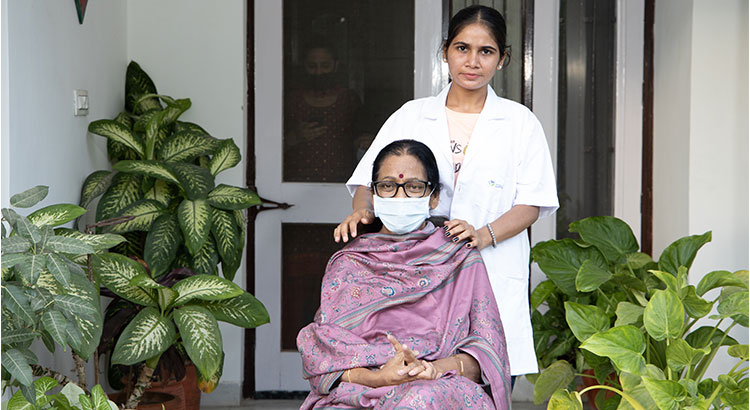
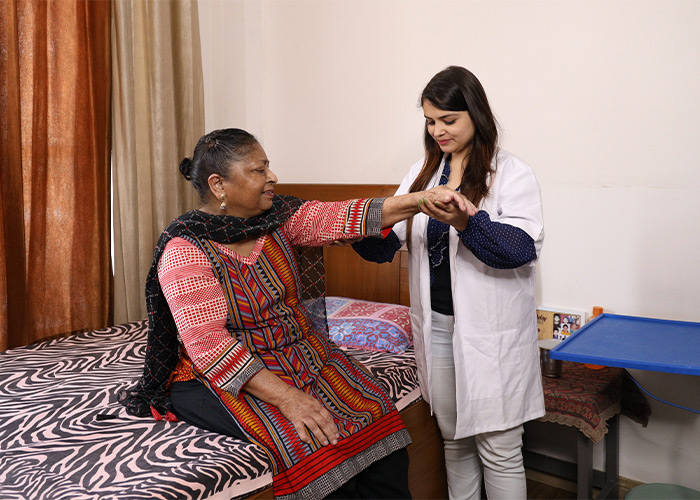
This is where Patient Care – General Nursing actually helps — not because families can’t care, but because they’re not trained to manage recovery.
Day 3–4: Real Problems Start Showing
This is when things get real.
- Patient becomes more weak
- Appetite drops
- Sleep pattern changes
- Mood becomes low or irritated
Families often think:
“Recovery time lagta hai… normal hai.”
Sometimes it is.
But sometimes, it’s the beginning of complications.
Without monitoring tools like ECG at Home or basic vitals tracking, it’s all guesswork.
Day 5–7: The Risk Phase Most People Don’t Expect
By now, attention drops.
- Relatives stop visiting
- Routine becomes loose
- Monitoring becomes irregular
And this is when:
- infections develop
- breathing issues start
- medication mistakes happen
In some cases, patients who looked “fine” end up going back to the hospital.
The Things No One Tells Families
1. Recovery Is Not Linear
Patient ek din better lagta hai, next day worse.
That’s normal — but confusing.
2. “Stable” Doesn’t Mean Recovered
Many patients are discharged when they are stable — not fully healed.
Some still need:
- oxygen support
- monitoring
- assistance
In such cases, ICU Care – Critical Care or ICU setup at home can be necessary — not optional.
3. Small Signs Matter More Than Big Ones
Things families ignore:
- halka breathlessness
- confusion
- unusual silence
- appetite kam hona
These are early signals.
Regular preventive lab tests can catch what the eye misses.
4. Nights Are the Most Risky
During the night:
- no one is actively watching
- patient condition can change
- response gets delayed
That’s why Live-in Care – 24 Hours Care becomes critical in many cases.
Where Most Families Struggle
Not because they don’t care — but because they try to manage everything alone.
They become:
- nurse
- doctor
- caregiver
- decision-maker
All at once.
And that’s overwhelming.
What Actually Helps in This Phase
Continuous Observation
Trained caregivers notice:
- breathing changes
- behavior shifts
- discomfort signs
Things families often miss.
Right Equipment at Home
Some patients still need support like:
- oxygen concentrator
- BiPAP/CPAP
- respiratory equipment
Without it, recovery becomes unstable.
Structured Monitoring Instead of Guessing
With:
- ECG at Home
- preventive healthcare packages
you’re not assuming — you’re actually tracking recovery.
For Families Living Away (NRI Reality)
This week is the most stressful.
“Sab theek hai na?”
“Koi dekh raha hai kya?”
But you can’t really know.
That’s where NRI Family Care becomes important — so care is not dependent only on updates from relatives.
The Truth About This First Week
Most complications don’t come suddenly.
They build slowly:
- missed medicines
- unnoticed symptoms
- delayed action
And this first week is where it all starts.
What Should Be Done Instead
Instead of assuming things are fine:
- Track vitals regularly
- Follow medication strictly
- Don’t ignore small changes
- Get tests if something feels off
- Have professional support if needed
Final Thought
The hospital handles the treatment.
But the first week at home decides the recovery.
It’s not about doing everything perfectly —
it’s about not missing what matters.
Because in recovery, small things make the biggest difference.