

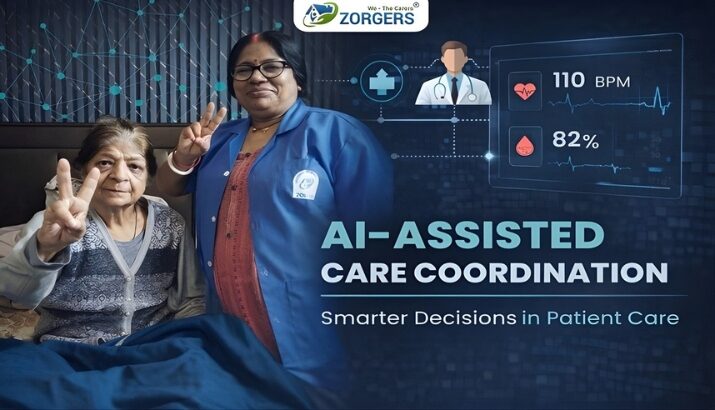
Healthcare is entering a new era where decisions are no longer based solely on observation and experience, but are increasingly supported by intelligent systems and real-time data. In home healthcare, this transformation is especially powerful, where coordination between caregivers, doctors, and families plays a critical role in patient recovery.
AI-assisted care coordination is redefining how patient care is planned, monitored, and executed — making it more precise, proactive, and personalized.
What is AI-Assisted Care Coordination?
AI-assisted care coordination refers to the use of intelligent systems that help organize, analyze, and optimize patient care activities.
Instead of fragmented communication and delayed decisions, AI enables:
- Faster interpretation of patient data
- Smarter scheduling of care services
- Early identification of health risks
- Seamless coordination between healthcare providers
This ensures that every aspect of patient care is connected and aligned toward better outcomes.
The Challenge in Traditional Care Coordination
In conventional home healthcare, coordination often depends on manual updates, delayed communication, and reactive decision-making.
This can lead to:
- Missed early warning signs
- Delays in treatment adjustments
- Increased risk of complications
- Higher chances of hospital readmissions
AI-assisted systems help eliminate these gaps by bringing real-time intelligence into the care process.
How AI Improves Decision-Making in Patient Care
AI doesn’t replace healthcare professionals — it empowers them.
By analyzing patient data continuously, AI systems can:
- Detect subtle changes in vitals
- Recommend timely interventions
- Support clinical decision-making
- Prioritize critical cases
For example, services like ECG at Home provide continuous cardiac insights, allowing healthcare providers to make faster and more accurate decisions without requiring hospital visits.
Similarly, regular preventive lab tests enable early detection of health issues, allowing intervention before conditions worsen.
Strengthening Coordination Between Care Teams
Effective patient care depends on collaboration between multiple stakeholders:
- Doctors
- Nurses
- Caregivers
- Family members
AI-assisted coordination ensures that everyone has access to the same information in real time.
Professional caregivers and nursing staff delivering Patient Care – General Nursing can update patient status continuously, while doctors can make informed decisions based on real-time inputs.
For patients requiring advanced monitoring, ICU Care – Critical Care and ICU setup at home ensure that even complex cases are managed with precision and coordination.
Personalized Care Plans Through Intelligent Systems
Every patient’s condition, history, and recovery pattern is unique. AI enables the creation of dynamic care plans that evolve based on real-time data.
For patients requiring continuous support, Live-in Care – 24 Hours Care ensures that monitoring and assistance are always available, while AI systems help adjust care routines based on patient progress.
This results in:
- Better recovery tracking
- Reduced complications
- Improved patient comfort
Enhancing Home-Based Treatment with Advanced Support
AI-assisted care coordination becomes even more effective when combined with advanced medical equipment and services.
Access to oxygen concentrators, BiPAP/CPAP, and other respiratory equipment allows patients to receive continuous support at home.
In cases requiring regular monitoring, tools like Holter Test at Home and diagnostic services ensure that critical health data is always available for analysis.
This integration of technology and care creates a strong ecosystem for patient recovery.
Supporting Families and NRI Care Coordination
One of the biggest challenges in home healthcare is keeping families informed — especially when they are not physically present.
Services like NRI Family Care enable families living abroad to stay connected with their loved ones through regular updates and coordinated care plans.
AI-assisted systems ensure transparency, allowing families to:
- Track patient progress
- Receive timely updates
- Participate in care decisions
This builds trust and provides peace of mind.
Reducing Risks and Preventing Hospital Readmissions
AI plays a crucial role in identifying risks before they escalate.
By combining continuous monitoring with services like preventive healthcare packages, healthcare providers can detect early warning signs and act quickly.
This proactive approach helps:
- Prevent complications
- Reduce emergency situations
- Minimize hospital readmissions
The Future of AI in Home Healthcare
AI-assisted care coordination is not just an innovation — it is becoming the foundation of modern healthcare delivery.
As technology continues to evolve, we can expect:
- More accurate predictive insights
- Automated care recommendations
- Seamless integration across healthcare systems
- Improved patient safety and outcomes
Conclusion
AI-assisted care coordination is transforming home healthcare by bringing intelligence, efficiency, and precision into every stage of patient care.
By combining real-time data, advanced medical services, and professional caregiving, patients can receive high-quality, personalized care in the comfort of their homes.
In today’s healthcare landscape, better coordination leads to better decisions — and better decisions lead to better patient outcomes.